
Artificial grass is a fantastic alternative for anyone who wants a beautiful lawn without the tedious maintenance of natural sod. However, synthetic surfaces are not entirely maintenance-free. If your yard is outside, it will encounter the elements and, more importantly, your pets. Learning how to deodorize artificial turf effectively keeps your outdoor space looking and smelling its best. Luckily, the process is simple and requires only a few routine steps.
Start with a Regular Cleaning Routine
The easiest way to manage smells is to stop them before they start. If your pet uses the lawn regularly, address messes quickly. You can blot up liquid waste with paper towels if you see it immediately. However, do not worry if you miss it. High-quality pet turf features a perforated backing that allows liquids to pass through into the base below.
Spray your grass with a garden hose at least once a week. Focus on the areas your pet favors most. This simple rinse washes away lingering uric acid and significantly reduces artificial grass odors. While you don’t need to grab the hose every time your dog goes, frequent rinsing is your best defense against buildup.
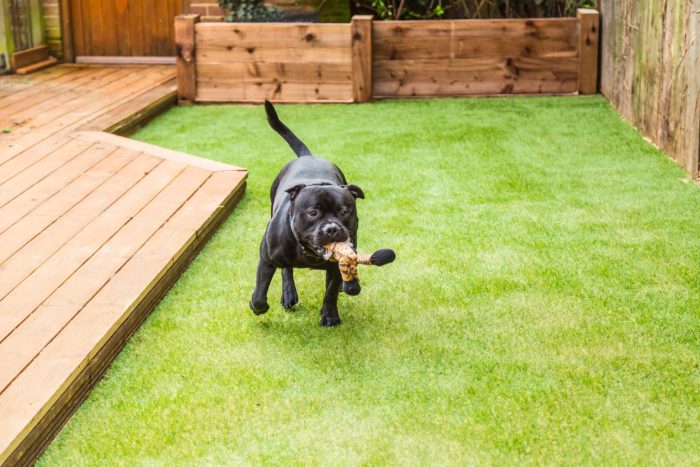
Deep Cleaning and Raking
Once a month, perform a more thorough cleaning to maximize the lifespan of your lawn. Start by picking up any organic debris like leaves or twigs. Then, use a plastic rake or a stiff-bristled broom to “bloom” the grass. Brushing the fibers upright ensures maximum drainage and prevents the turf from matting down.
After raking, give the area a heavy soak with the hose. This ensures any trapped waste under the turf layer is flushed out. For more information on maintaining a safe environment for your animals, you can review the BC SPCA guidelines on pet-safe outdoor spaces.
Use Commercial and Household Deodorizers
If water alone is not enough, you have several effective options to how to deodorize artificial turf.
- Commercial Cleaners: Look for an enzymatic cleaner specifically designed for synthetic turf. These products use natural bacteria to “eat” the organic matter that causes smells. They are safe for pets and very effective.
- Baking Soda: For a quick household fix, sprinkle baking soda over the affected area. Baking soda is a natural odor neutralizer that is safe and inexpensive.
- Vinegar Solution: Mix equal parts white vinegar and water in a spray bottle. This mixture kills bacteria and breaks down ammonia.
Apply your chosen cleaner, let it sit for ten minutes, and then rinse it away. For stubborn stains, use a stiff brush to work the cleaner into the fibers. For more technical advice on which products won’t damage your specific grass type, check our spec sheets.
Quick Q&A: Deodorizing Your Lawn
Odors are usually caused by bacteria growing in trapped pet waste. High heat can also make these smells more noticeable.
No. Bleach can discolor the synthetic fibers and harm your pets. Stick to enzymatic cleaners or vinegar.
Yes. Using an anti-microbial specialty infill can prevent bacteria from growing in the first place.
Use caution. A power washer can displace your infill. A standard garden hose is usually sufficient for deodorizing.
Maintain a Fresh Yard All Year
Proper maintenance ensures you get the maximum value out of your lawn. By knowing how to deodorize artificial turf, you create a welcoming environment for your family and guests. You can enjoy the lush look of green grass without any of the unpleasant side effects of pet ownership.
Are you looking for a more durable, pet-friendly turf solution? Contact Synthetic Turf International Canada today to find the perfect grass for your home!