
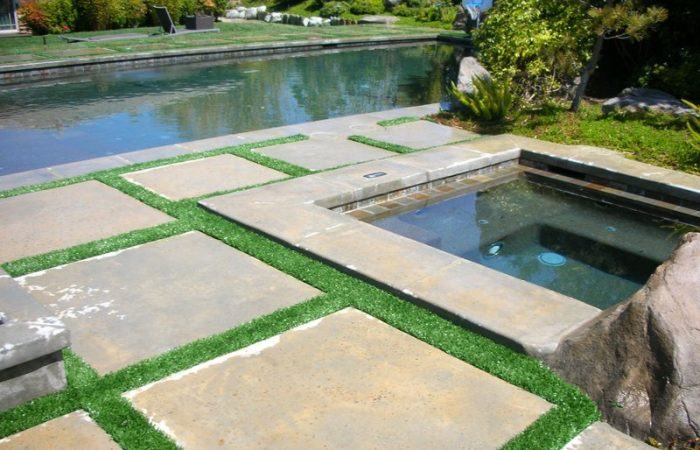
Artificial grass is a popular way to upgrade your yard or add a splash of green to rooftop patios and balconies. While a full lawn is a classic choice, many homeowners use synthetic turf to highlight other landscaping features. One of the most stylish trends is installing artificial grass between paving stones. This “ribbon” or “checkerboard” look is low-maintenance and provides a high-end, architectural feel to any outdoor space.
Preparing for a Precise Installation
Before you begin, you must prepare the gaps between your stones properly. Clear away all debris with a garden rake. Remove any sticks, roots, or loose stones that could cause the turf to lay unevenly. Creating a firm, flat base ensures your turf looks flush with the stone surface.
Next, you must install a sub-base. This step is crucial for drainage and preventing the turf from sinking over time. It can be tricky to compact a sub-base in narrow gaps, so we recommend using a hand tamp or a heavy brick to pack the material down tightly. Aim for a depth of 2–4 inches of crushed stone or gravel. For more complex projects involving large-scale stone work, you can reference the Interlocking Concrete Pavement Institute (ICPI) for standard base guidelines.
Laying Your Turf and Cutting Around Pavers
Once your base is level, roll your artificial grass over the entire area. Let it rest in the sun for at least two hours. This allows the backing to expand and settle. After it rests, you should see the faint outline of the pavers beneath the turf. If the outline is not clear, walk along the gaps to press the turf against the stones.
When it is time to cut, use the stone edges as your guide. Use a sharp utility knife with hook blades for the best results. Cut at a 45-degree angle toward the stone, leaving a tiny gap of approximately an eighth of an inch. This small gap allows for thermal expansion and ensures the turf doesn’t bunch up against the pavers during hot Canadian summers. Browse our spec sheets to see which turf density works best for narrow strips.
Finishing the Seams and Adding Infill
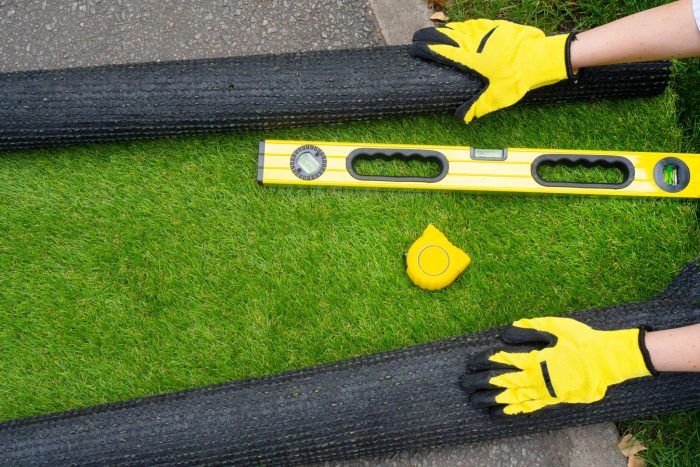
The difference between a DIY project and a professional look is in the finishing. Join any seams carefully and trim off excess fibers. You can secure these strips using seaming tape and adhesive to prevent the edges from lifting. If you used nails to hold the turf during cutting, remove them once the adhesive has cured.
Finally, add a layer of specialty infill, such as silica sand. Infill helps the blades stand upright and protects the backing from UV rays. Slowy pour the infill into the narrow gaps and use a stiff brush to work it into the fibers.
Quick Q&A: Turf and Paver Design
Yes. Unlike natural grass, which often dies in narrow strips due to heat and lack of water, synthetic turf stays lush and vibrant year-round.
We recommend a professional-grade weed barrier beneath your sub-base. This stops invasive plants from growing through the drainage holes.
Yes, if you use a high-density athletic or landscape turf, it can withstand the weight of a vehicle in a driveway setting.
Not at all. You can use a leaf blower to remove debris or a garden hose to rinse away dust and pollen.
Elevate Your Outdoor Design
Whether you are designing a modern patio or a traditional walkway, installing artificial grass between paving stones adds texture and color to your home. It eliminates the need for string trimming and ensures your hardscape looks perfect in every season.
Are you ready to transform your patio? Contact Synthetic Turf International Canada today to find the perfect turf for your custom stone project!